Executive Summary
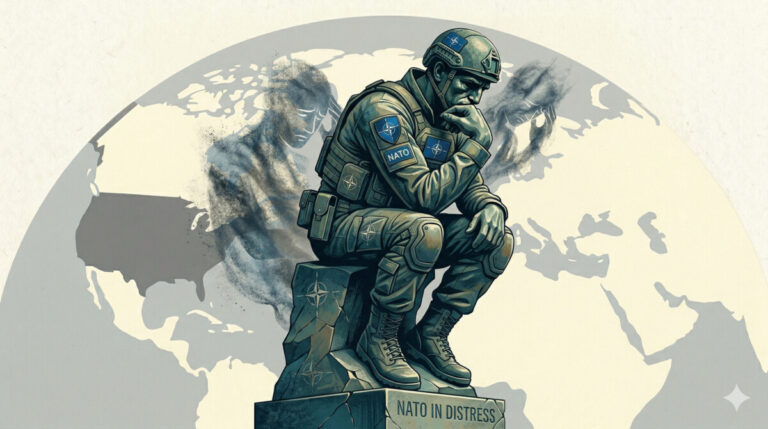
By April 2026, the North Atlantic Alliance faces a profound existential crisis. The U.S.-led ‘Operation Epic Fury’ against Tehran has ignited a sharp divergence of strategic interests regarding the Strait of Hormuz. As Washington threatens a total decoupling, the alliance’s defensive framework is nearing paralysis due to chronic supply depletion in the East and escalating transactional pressures from the White House. This report diagnoses the core of NATO’s Dilemma and the subsequent shift toward European self-reliance.
1. NATO’s Dilemmaⓐ: The Hormuz Conflict
Energy Blockade & Global Shock
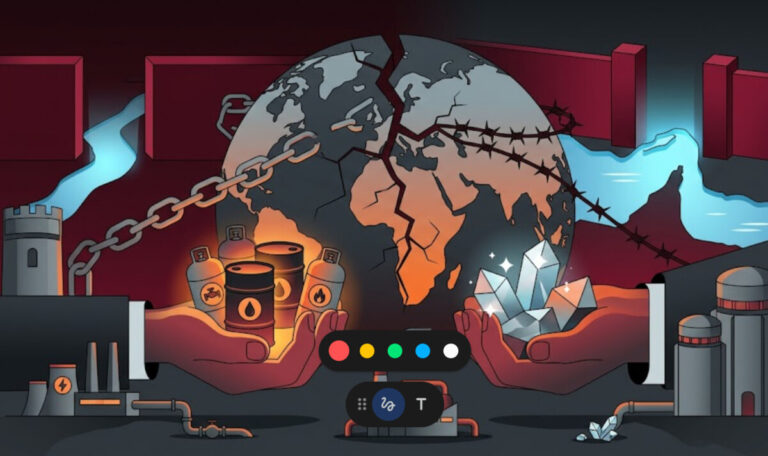
The U.S.-Israeli strikes on Iran have effectively severed the global energy jugular. With 20% of maritime oil traffic halted at the Strait of Hormuz, prices for crude, LNG, and essential gases like helium—critical for semiconductors—have spiked to record levels. This resource strangulation has paralyzed international markets, leading Australian Prime Minister Anthony Albanese to broadcast emergency appeals for public transit use as global fuel supplies reach a breaking point.
[Reference]Foreign Policy: Trump Mulls Pulling U.S. Out of NATO
European Strategic Distance
Brussels and other Allied capitals have responded with firm non-compliance. The reluctance centers on the fact that Persian Gulf hostilities do not trigger Article 5’s collective defense. Spanish Premier Pedro Sánchez termed the mission “reckless,” predicting consequences far worse than the 2003 Iraq invasion. Italy and Spain have officially restricted U.S. access to joint airbases like Sigonella, citing Washington’s failure to consult partners before initiating the air war.
[Reference]TIME: Will the Strait of Hormuz Sink NATO?
2. NATO’s Dilemmaⓑ: Transactional Pressures
The “Paper Tiger” Rhetoric
President Trump has weaponized European caution to dismiss the 77-year-old alliance as a “Paper Tiger.” In recent interviews, he suggested U.S. participation is “beyond reconsideration” post-conflict, openly mocking the Royal Navy’s carrier capacity and labeling Prime Minister Starmer’s energy policies as ineffective. This transactionalism treats security as a “one-way street” where America is no longer willing to provide a “free defense” without reciprocal military support in the Middle East.
[Reference]CNBC: Trump says he’s considering pulling U.S. out of ‘paper tiger’ NATO
The Rubio-Kallas Exchange
Tensions reached a fever pitch at the G7 meeting in Paris, where Secretary Marco Rubio and EU’s Kaja Kallas engaged in a heated exchange. Rubio expressed irritation that the U.S. is expected to mediate Ukraine while Europe denies basing rights for the Iran conflict. This diplomatic friction signals a move toward “selective engagement,” where the U.S. may reexamine its presence based on the specific utility of individual allies.
[Reference]Reuters: Trump’s anger over Iran thrusts NATO into fresh crisis
3. NATO’s Dilemmaⓒ: Legal & Power Hurdles
Legality of Withdrawal
While Trump mulls an exit, the 2024 NDAA Section 1250A provides a “firm legal brake,” prohibiting a President from withdrawing without a two-thirds Senate majority. However, legal experts warn this protection is far from solid. A President could still bypass Congress by invoking Article II Commander-in-Chief authority, leading to a constitutional confrontation where the courts act as a referee.
Erosion of Deterrence
Even without a formal exit, a President’s refusal to act during an attack nullifies the treaty. As legal scholar Ilaria Di Gioia notes, the mere suggestion of a U.S. exit emboldens adversaries and shakes European planning. If the security guarantee is no longer rock-solid, the alliance’s core deterrence effectively ceases to exist, regardless of its legal status.
[Reference]TIME: Trump Threatens to Pull U.S. Out of NATO. Can He Legally Do That?
4. NATO’s Dilemma: Eastern & Hybrid Risks
Logistical Void & Ideological Dissent
Ukraine’s stalemated war has depleted European arsenals to dangerous levels. As Russia makes gains in the Donbas, ideological cracks are appearing in Allied capitals. Candidates like John Clark in the UK have publicly blamed alliance expansion for the conflict, while the U.S. remains mum on reports that Moscow is providing targeting data to Iran—further complicating the trust within the bloc.
[Reference]BBC: Reform candidate blamed Nato for Ukraine war
Putin’s Hybrid Ambitions
Despite 1.3 million casualties and internal calls for his resignation from former supporters like Ilya Remeslo, Vladimir Putin remains committed to his imperial delusions. Sensing American vacillation, Moscow could launch hybrid operations in Estonia to “liberate” ethnic Russians—a test that NATO, in its current fractured state, may struggle to meet effectively.
[Reference]The Hill: Putin’s delusions could rouse him to take on NATO
5. NATO’s Dilemmaⓓ: The Path to Autonomy
Strategic Self-Sufficiency
Europe has entered an era of “thinking of NATO without Americans.” Combined defense outlays have surged by 20%, and initiatives like the Japan-France rare earth deal aim to decouple security from volatile global supply chains. This “Strategic Autonomy” is no longer a French preference but a default survival expectation for the entire continent.
Anglo-French Nuclear Pivot
As the U.S. nuclear umbrella appears increasingly transactional, formal discussions on an Anglo-French deterrent have accelerated. While leaders like Estonia’s Hanno Pevkur urge for bridge-building, the underlying trend toward a “European Pillar” of security is irreversible. The alliance is evolving from a U.S.-led hegemony to a more localized, fractured security arrangement.
6. Conclusion: A Realpolitik Future
The NATO of 2026 has devolved into a partnership of receipts. Even if a formal decoupling is avoided, the trust that served as the fabric of Transatlantic bond has been replaced by a ruthless Realpolitik. Allies must now navigate a world where commitment is measured by transactional utility rather than mutual history. The page of 80 years of working together is turning toward an uncertain, multipolar security landscape.
📘 Editor’s Selection
Gain deeper clarity on the shifting geopolitical landscape and the future of the Transatlantic alliance with these expert-recommended resources:
- The Atlantic Alliance in the Long 20th Century
Offers a comprehensive analysis of transatlantic relations, exploring the tensions between Atlanticism and Europeanism. It raises critical questions about the nature of American hegemony in Western Europe and the challenges to the alliance’s ongoing unity. - NATO: What You Need To Know
A sharp, concise account examining NATO’s origins, structure, and rapid expansion amidst mounting global tension. It provides an indispensable primer on how decisions are made, funded, and the alliance’s role in recent conflicts like Ukraine. - TIME Magazine: Make Iran Great Again (March 2026)
An inside look at President Trump’s high-stakes gamble in the Middle East. It traces the events of Operation Epic Fury and examines what this turning point means for Iran, the United States, and the wider global order.
* As an Amazon Associate, I earn from qualifying purchases.
Written : Global Affairs Senior Analyst
Date: April 4, 2026