(2026 Supplementary Budget Special: Part 1)
The Dilemma of the 1,540 KRW/USD Exchange Rate Shock and the 26.2 Trillion Won Supplementary Budget:
Executive Summary: Amidst the volatile convergence of a surging exchange rate and looming recessionary fears triggered by Middle East conflicts, the South Korean government has deployed a 26.2 trillion won supplementary budget to bolster domestic demand. However, this report warns that the fiscal expansion may inadvertently exacerbate stagflationary pressures and weaken the won, necessitating a highly vigilant approach to macroeconomic management.
1. Situation Analysis: The “Triple High” Shock and the 26.2 Trillion Won Emergency Prescription
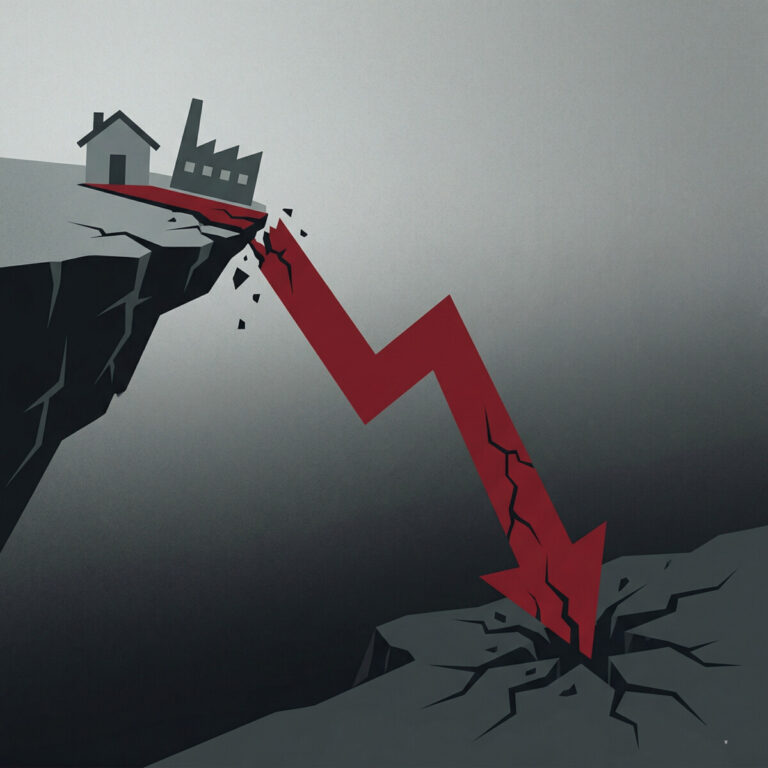
The South Korean economy is currently navigating a severe macroeconomic storm. With international oil prices breaching the $100 per barrel mark, the nation is grappling with the so-called “Triple High” shock: high inflation, high interest rates, and a high exchange rate. Most alarmingly, the KRW/USD exchange rate has surged past 1,530, nearing the 1,540 mark—a level of instability not seen since the height of the 2009 global financial crisis.
In a decisive move to counter these multifaceted threats, the government has finalized a 26.2 trillion won supplementary budget. This emergency fiscal tool is strategically divided into three primary pillars: 10.1 trillion won to alleviate the burden of high oil prices, 2.8 trillion won to stabilize the livelihoods of the vulnerable, and 2.6 trillion won to minimize industrial damage and secure supply chains. While the scale is significant, a deeper analysis is required to determine the long-term impact of this capital injection on the real economy.
2. Hypotheses and Verifications: Will the Massive Fiscal Injection Be a Remedy or a Poison?
[Hypothesis 1] The 4.8 trillion won cash-equivalent subsidy will significantly stimulate domestic inflation.
The most scrutinized component of this budget is the “High Oil Price Damage Support Fund,” which allocates 4.8 trillion won to the bottom 70% of income earners (approx. 32.56 million people). With individual payouts ranging from 100,000 to 600,000 KRW, this massive liquidity will hit the market through local currencies and credit points. Basic economic principles dictate that an increase in liquidity leads to currency devaluation and price hikes. Consequently, the market’s concern that this subsidy will reignite inflationary pressure is a highly rational deduction.
The government, however, maintains a defensive stance. They argue that because the economy is in a “negative GDP gap” state—where actual demand is lower than potential production capacity—the funds will fill consumption voids rather than cause an inflationary spike. Furthermore, the administration has earmarked 5.1 trillion won for energy cost containment, including an expansion of the “Maximum Oil Price System” to include marine diesel, aiming to block the root causes of inflation at the source.
Risk Check: Current inflation is primarily “cost-push” (driven by external oil price shocks) rather than “demand-pull” (driven by excessive spending). In this environment, injecting cash to stimulate demand may intensify stagflationary pressures—where prices rise while the economy stagnates. Moreover, artificial price controls, while effective in the short term, risk distorting the market and creating a long-term fiscal burden that cannot be ignored.
[Hypothesis 2] Massive fiscal expansion will increase national debt and complicate exchange rate defense.
Typically, a large-scale supplementary budget necessitates the issuance of national bonds, which can drive up interest rates and signal a deterioration of fiscal health. This often leads to capital flight, putting further downward pressure on the won. Given the precarious 1,540 exchange rate level, any fiscal move that undermines investor confidence could be catastrophic.
Uniquely, this 26.2 trillion won budget involves zero new bond issuance. The government is utilizing 25.2 trillion won in “excess tax revenue” generated by the semiconductor boom and a buoyant stock market. By using 1.0 trillion won of this excess to repay existing debt, the debt-to-GDP ratio is projected to drop from 51.6% to 50.6%. The government cites this improvement in fiscal indicators as proof that the budget will not provoke currency or interest rate volatility.
Risk Check: Critics warn of a “fiscal mirage.” Excess tax revenue is a cyclical byproduct, not a structural improvement. Even without new bonds, the injection of 26 trillion won into the market serves as a potent signal of fiscal and monetary expansion. This can fuel expectations of currency devaluation among global investors, meaning the structural risk to the exchange rate remains a critical factor that requires continuous monitoring.
3. Thinker’s Insight: Walking the Tightrope Between Two Evils
In summary, this supplementary budget is less a “precision strike” to cure the economy and more an “inevitable compromise.” The government is attempting to walk a tightrope, accepting certain macroeconomic costs to prevent a total collapse of domestic demand. In the harsh reality of economics, there is no magic solution that simultaneously stabilizes prices and boosts growth without trade-offs.
Nonetheless, the budget shows strategic depth by moving beyond simple cash handouts. The allocation of 500 billion won for naphtha import subsidies and 200 billion won to secure 1.3 million barrels of oil reserves demonstrates a commitment to industrial defense. Simultaneously, the push for “AI Transformation” (AX) in manufacturing processes indicates an effort to turn this crisis into a structural opportunity for future competitiveness.
While the government expects a 0.2 percentage point boost to growth, the true measure of success will be their ability to control the side effects: inflationary pressure and exchange rate volatility. For investors, the strategy should involve identifying industries poised to benefit from these policies while aggressively hedging against the “worst-case scenario” of the exchange rate breaching the 1,600 mark.
[References and Sources]
- Ministry of Planning and Budget, “2026 Supplementary Budget Proposal: Macroeconomic and Fiscal Framework.”
- Joint Briefing on the Economic Impact of the Middle East Crisis and Fiscal Countermeasures (March 31, 2026).
- National Statistical Data on Semiconductor Exports and Corporate Tax Revenue Trends.
Author: Economic & Finance Team Editor
Date: March 31, 2026